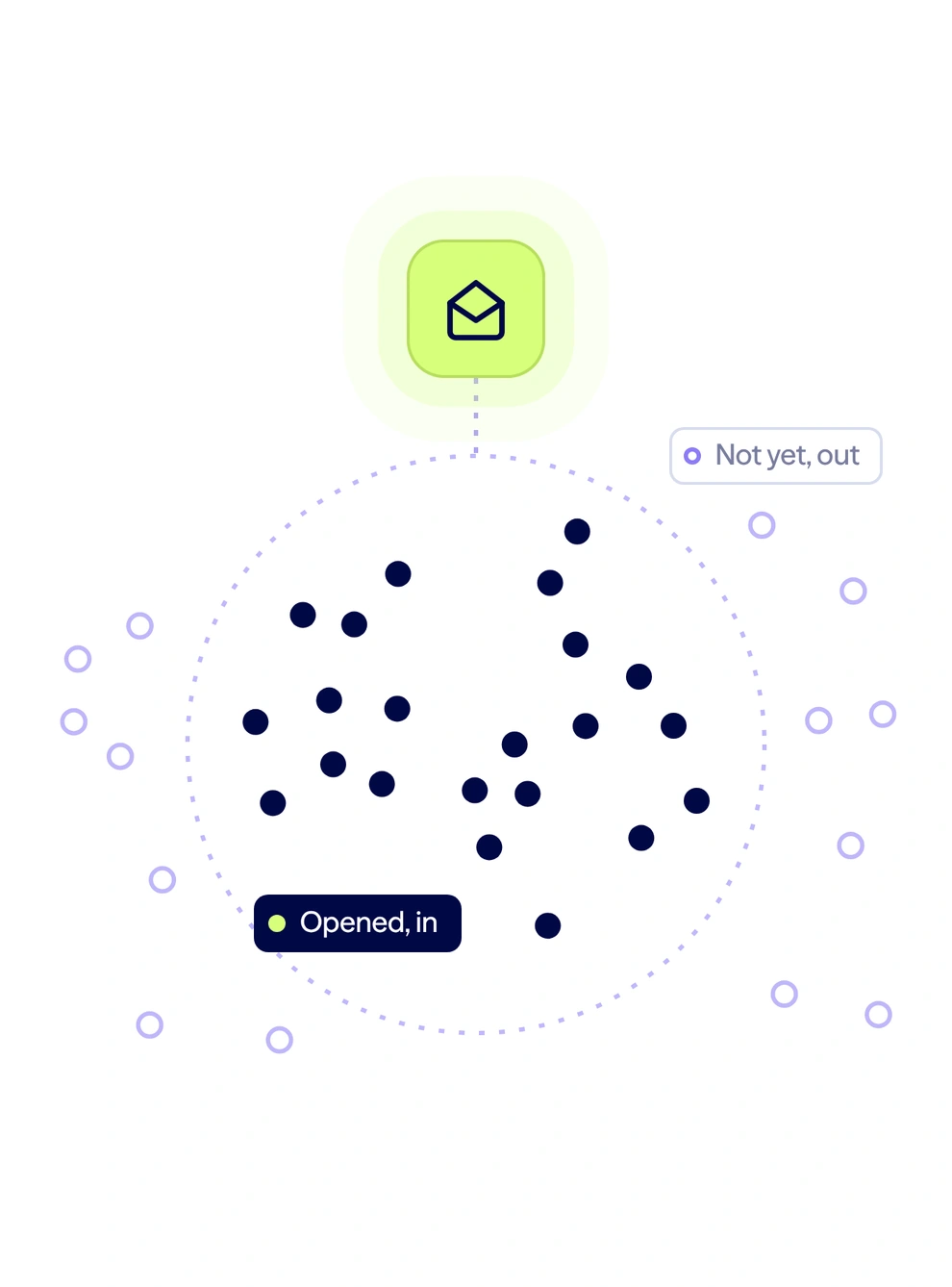
Accurate audience
Who to include
Setting the audience at first email open makes sure the audience is as accurate as possible.
Zembula provides the testing capabilities you need to justify budget for personalization at scale.

We power 30+ billion personalized messages annually


Every test has its place, but finance and executive teams want to see test results that prove incremental revenue.
What it measures
How much revenue was attributed to a specific send.
Which of two creatives won with a single day’s audience.
The causal effect of a block strategy on channel revenue across a full window.
What it hides
If you send less email, your revenue per send will always go up.
Everything after the send: memory, fatigue, journey effects. The winner can flip next week.
Very little. Both groups live through the same sends, seasonality, and promos.
Incrementality
None. It moves credit between channels and sends.
Weak. One exposure, one moment, no durability.
Yes. A randomized difference is a causal one.
Repeatable
It isn’t a test at all.
Re-run it and the answer often changes.
Re-run the window and the number should come back.
CFO verdict
A reporting metric, not evidence.
Suggestive, not durable.
Evidence. Randomized, held, reproducible.
What it measures
How much revenue was attributed to a specific send.
What it hides
If you send less email, your revenue per send will always go up.
Incrementality
None. It moves credit between channels and sends.
Repeatable
It isn’t a test at all.
CFO verdict
A reporting metric, not evidence.
What it measures
Which of two creatives won with a single day’s audience.
What it hides
Everything after the send: memory, fatigue, journey effects. The winner can flip next week.
Incrementality
Weak. One exposure, one moment, no durability.
Repeatable
Re-run it and the answer often changes.
CFO verdict
Suggestive, not durable.
What it measures
The causal effect of a block strategy on channel revenue across a full window.
What it hides
Very little. Both groups live through the same sends, seasonality, and promos.
Incrementality
Yes. A randomized difference is a causal one.
Repeatable
Re-run the window and the number should come back.
CFO verdict
Evidence. Randomized, held, reproducible.
Zembula’s tests run at the content block level, so you can have many independent tests running in the same email.
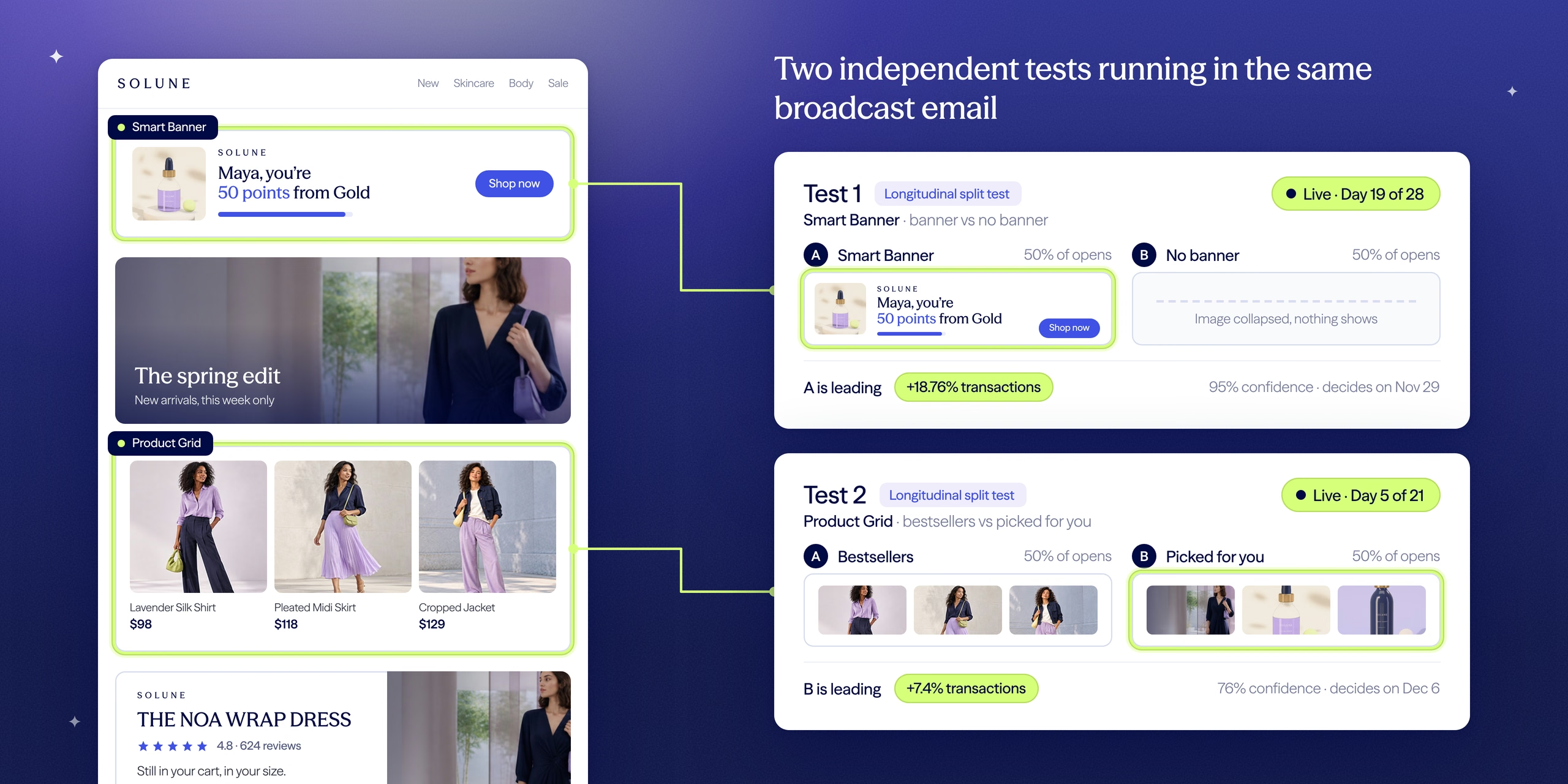
The hardest part of a longitudinal split test is managing the audiences over time, and we make that easy.
Accurate audience
Setting the audience at first email open makes sure the audience is as accurate as possible.
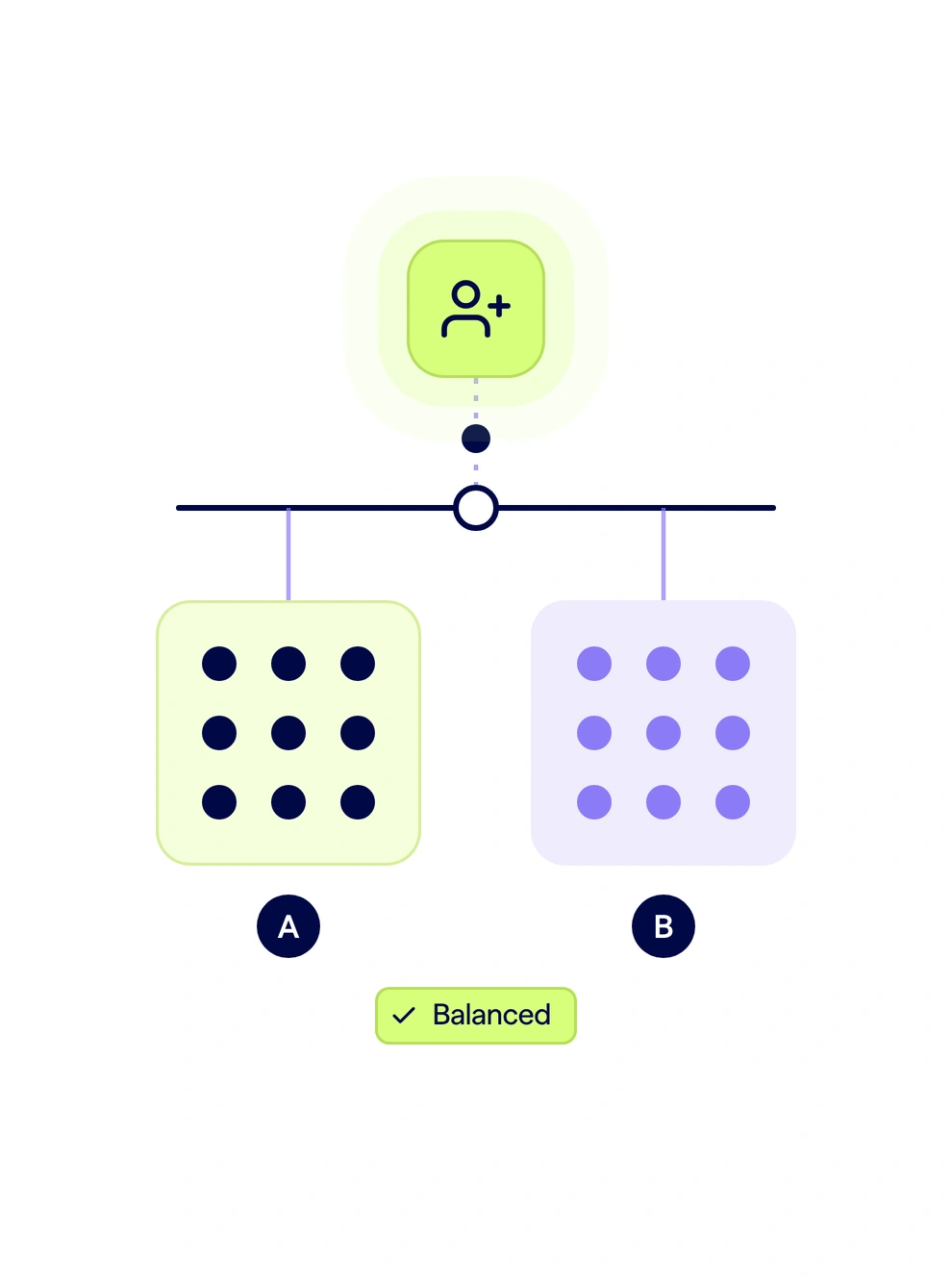
New subscribers
Assigning new subscribers at first open makes sure your audiences stay perfectly balanced.
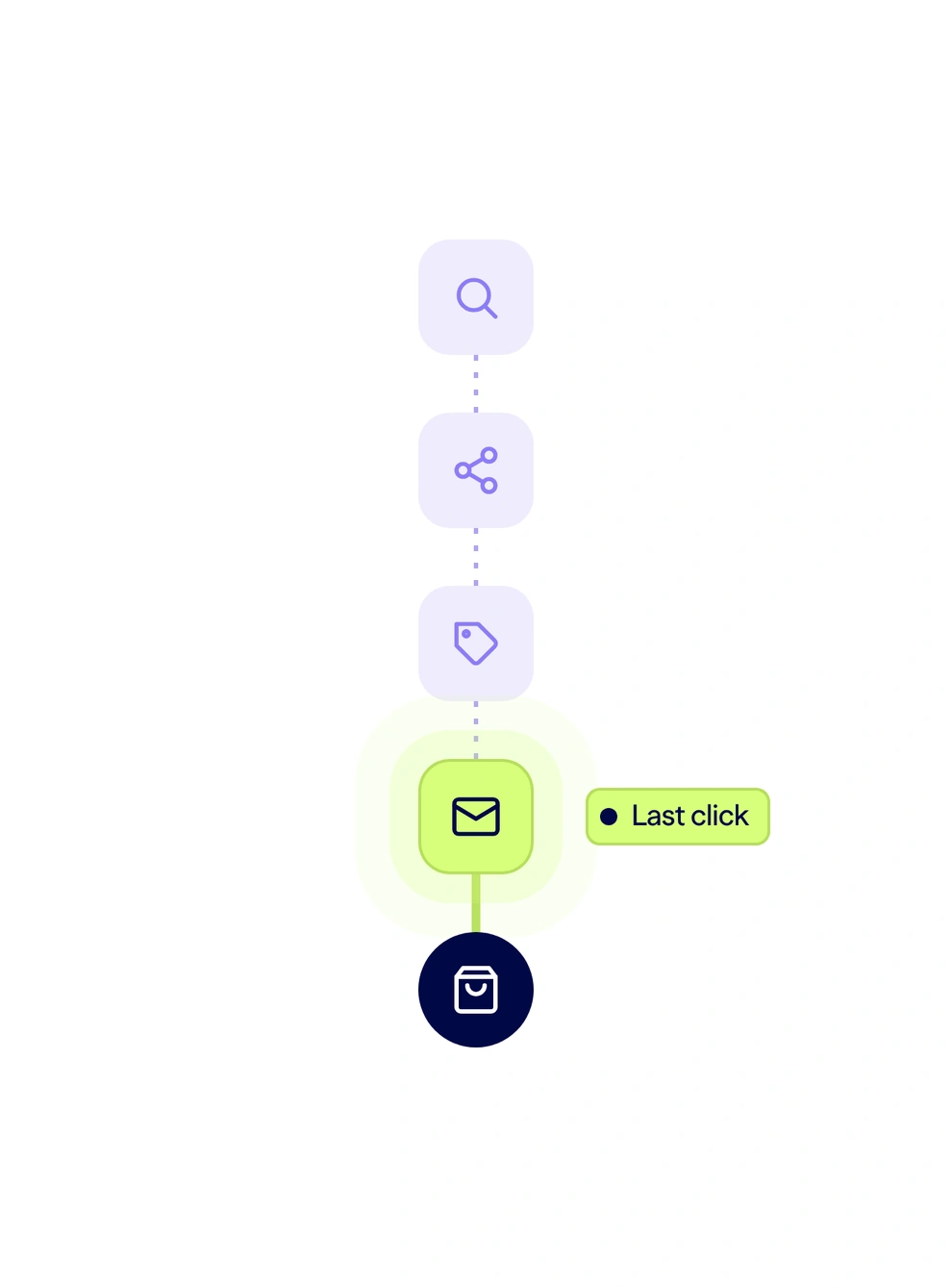
Last click channel attribution
Last click channel attribution captures the most conservative and accurate view of results.
Zembula’s day-to-day analytics answer where and how: which placements, which offers, which designs. The longitudinal test answers whether the whole thing pays.
Analytics
Use analytics for day-to-day design decisions, decisioning logic, and what data to use together within design. RPM and CTC tell this story effectively.
Longitudinal tests
The longitudinal split test measures transactions and revenue from each audience over weeks, so that you can determine incremental transactional and revenue lift.
Run a longitudinal split test and measure the real revenue lift.

