


REI's Two-Handlebar AI Ad Is the Case for Deterministic Smart Banners
REI’s two-handlebar bike wasn’t an AI problem, it was generative AI at the final render. Here’s why deterministic Smart Banners personalize at scale without the slop.

For about a week in June 2026, REI ran an Instagram ad for a Van Rysel road bike that had two sets of handlebars, frame lettering that looked like it had melted, extra chains hanging off the drivetrain, and a rider whose face had been stitched together from people who were never at the photo shoot. REI didn’t design it that way. Meta did, after auto-enrolling the co-op in a generative “AI personalization” tool. I want to use that bike to make a point I keep making to every CMO who will sit still for it: this is not a reason to fear personalized creative. It is the clearest argument yet for deterministic Smart Banners, the kind that build a final image from locked, approved layers instead of letting a model invent the last pixel.
Here is the uncomfortable part for everyone cheering on AI creative. The goal of Meta’s tool, change the image to fit the audience, is exactly what good email personalization does every day. The intent was fine. The execution method was the disaster. Meta let a generative model render the final frame, at delivery, with no human between the model and the customer, and the model confidently shipped a bike that cannot exist.
So the real question for your program is not “should we personalize creative at scale?” You already should, and your customers already expect it. The question is which machine draws the final image a subscriber sees. Get that one architectural decision right and “personalize at scale” and “protect the brand” stop fighting each other. Get it wrong and you are one auto-enrollment away from a two-handlebar bike with your logo on it.
The two-handlebar bike: what actually happened to REI’s Instagram ad
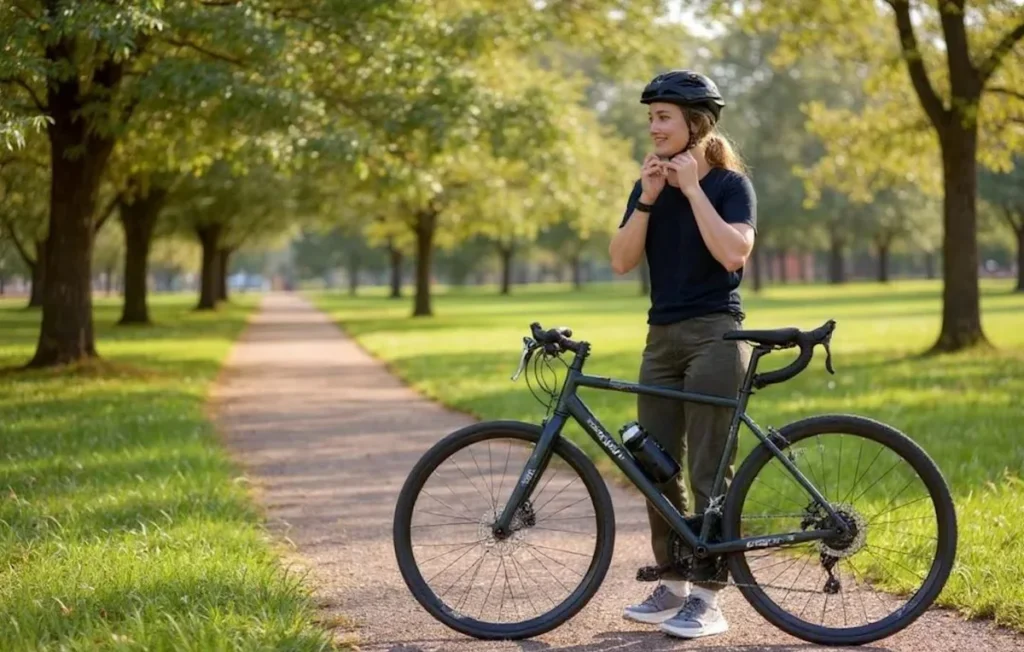
The facts are not in dispute, because REI confirmed them. The co-op supplied an accurate, vendor-provided photo of the Van Rysel EDR AF road bike. Meta’s Advantage+ creative tool then altered it inside the ad account and pushed it live. The result, which ran for roughly a week before REI pulled it on June 22, 2026, showed a drivetrain with too many chains, a melted-looking wordmark, and a cyclist’s face composited from people who were not in the original shoot. Reddit’s r/REI labeled it “AI slop,” and it spread from there.
REI’s own explanation, given to Business Insider and others, is worth reading slowly: “Meta auto-enrolled us in an AI personalization tool that produced an inaccurate and inappropriate alteration of a vendor-provided image in some of our ads.” Auto-enrolled. The brand did not ask for a generated image. It got one anyway, and it owned the fallout.
The person with the most standing to be annoyed was Amity Rockwell, the cyclist from the original Van Rysel shoot, whose likeness got remixed. As she put it on Instagram, reported by Fast Company: “The thing is, this was an official shoot that I was hired for. So why are they AI deep frying the images? To modify product they supposedly selling? And my face along with it?” For a brand whose equity is built on authenticity and the outdoors, the damage hit exactly where it hurts.
The failure wasn’t “AI,” it was generative AI at the final render
It is easy to read this as “AI made a bad image” and move on. That read is too lazy to be useful. The sharper version: this was not a personalization failure, it was personalization executed generatively. Meta’s tool had a reasonable job, change the creative to fit the audience. The method it used to do that job was to let a generative model paint the final frame, at the moment of delivery, with no review on the way out.
Generative output has a specific failure mode that matters in a customer-facing channel. It looks correct. It is confident. And it is fabricated. The model does not know a bike has one set of handlebars; it knows what pixels usually sit near other pixels. Most of the time that is close enough to fool a quick glance. When it is wrong, it is wrong in public, on your brand, at the size of your media spend. Meta’s own terms warn that AI outputs may be “inaccurate, incomplete, misleading, offensive, and/or inappropriate,” and they put review responsibility on the advertiser, per coverage from Yahoo Tech. Read that again: the platform reserves the right to fabricate, and you sign for the result.
Deterministic composition keeps Smart Banners on-brand by construction
Here is the alternative, and it is the architecture behind every Smart Banner we build. Deterministic composition does not invent a final image. It assembles one from layers a human already approved: brand fonts, art-directed product photography, pricing and urgency overlays, the exact logo lockup. Those layers are locked. Live data flows into the slots that are meant to hold data (the product, the price, the countdown, the loyalty tier), and nothing else moves. The render is a known quantity before a single subscriber opens the email.
That is what “brand-safe by construction” means. A deterministic Smart Banner cannot grow a second set of handlebars, because the bike is a photograph the art director signed off on, not a guess. It cannot melt your wordmark, because the type is set in your font at a fixed size. The system has no creative license at render time, which is precisely the property you want when there is no human left in the loop. If your product recommendation email doesn’t look like your brand today, this is usually why: it was stitched from HTML cards or generated assets instead of composed from locked, art-directed layers. The fix is to make every render a composition, not a creation. Our guide to Smart Banners walks through how that works in practice.
Where AI belongs in the stack, and where it must never sit
None of this is an argument that AI has no place in creative. It has a very good place. The discipline is knowing which step it is allowed to touch. Use AI to create foundational assets once: extend a product background, draft a dozen headline variants for a human to approve, expand a catalog shot to a new aspect ratio. Do that work upfront, review it, and store the approved result in your DAM. The cost is paid one time, and the output passes through human judgment before it ever reaches a customer.
Use AI again at open time for decisioning, choosing which approved use case a given subscriber should see (abandoned cart, shipment tracking, the day’s offer). What AI must never do is generate the final image at the moment of open, with no review, on its way to an inbox. That is the one seat in the stack where a confident fabrication becomes a published mistake. I wrote a longer CEO framework for what you hand to the machine for exactly this reason: the governance question is not “AI or not,” it is “which step.”
Why deterministic Smart Banners are the only approach that scales
There is a second reason to keep generation out of the final step, and it is financial. Generative rendering does not survive the volume that real personalization requires. A retailer with a one-million-person list, sending daily with several personalized images per send, needs on the order of 1.46 billion rendered images a year. At roughly $0.20 per generated image, that is about $292 million annually for image generation alone. Even the cheaper model tiers land in the hundreds of millions. I ran this math in detail before, and no email budget on earth absorbs it.
Deterministic composition renders the same volume from templates at a marginal cost that approaches zero, because each image is computed, not generated. There is no GPU inference per render and no library of billions of pre-made files to store. For scale: the Zembula platform composed more than 2.5 billion one-to-one personalized images in a single month in 2026, served as individual image URLs, at platform cost rather than per-image cost. Put the two methods on the same axis and the contrast is almost comical. Remove generation from the last step and both problems get solved by the same architecture.
Brand-safe testing: millions of variations your creative director can’t spot
Once every variant is composed from approved layers, testing stops being a brand risk. You can run millions of creative variations, one per subscriber if you want, and measure them at the block level with variant-level attribution like revenue per thousand (RPM) and click-to-conversion (CTC). You are not gambling a campaign on a model’s taste. You are choosing among combinations of assets a human already blessed.
Here is the bar I ask teams to hold: if your creative director looked at a personalized banner without being told it was dynamically composed, they should believe it was hand-designed for that one campaign. REI’s ad fails that test in the first glance. A deterministic Smart Banner is built to pass it a billion times. The performance is there to justify the effort too. Personalized image blocks routinely beat the roughly 2.5% click-to-conversion of a standard email by a wide margin, with the strongest behavioral combinations landing far higher. The breakdown is in our 2025 email performance benchmark report if you want the numbers.
What Smart Banners mean for your email program
Step back and the REI mess is really a story about owned versus rented media. The slop happened in paid social, on creative the brand rents and a platform controls. Email is the opposite. You own the audience, you hold the first-party identity, and you control the render. That is a structural advantage the ad team does not have, and it is the reason a dollar of measurement and creative discipline often goes further in email than in the auction. The same first-party signal that makes a Smart Banner accurate also sharpens your Meta and Google audiences, so the discipline pays twice.
Customers are not asking for less personalization. McKinsey’s latest read says 71% of consumers expect personalized interactions and 76% are frustrated when they don’t get them. The trap is that off-brand, degraded personalization reads as a broken promise, which is worse than none at all. Volume without fidelity erodes the relationship it was supposed to deepen. The way out is not to personalize less. It is to make every personalized render something a human would have approved, by composing it instead of generating it.
Key takeaways
- The intent was fine; the render method wasn’t. Modifying creative per audience is what good personalization does. Letting a generative model paint the final pixel is what produced the two-handlebar bike.
- Deterministic Smart Banners are brand-safe by construction. Final images are composed from locked, art-directed layers plus live data, so they cannot fabricate a product, a face, or your logo.
- AI belongs upfront and at decision time, never at final render. Generate foundational assets once and review them; let computation handle the billions of per-open renders.
- Economics force the same answer. Generating 1.46 billion images a year runs near $292 million; deterministic composition renders the same volume at a marginal cost near zero.
- Brand-safe variants are testable variants. Compose from approved layers and you can run and measure millions of variations on RPM and CTC without risking the brand.
Grow your business and total sales